ReflectionsMay 12, 202611 min read
First Crossroads: The First Time I Threw Myself Into Something Completely New
There's a version of courage that isn't loud. It's the kind that shows up when you walk into a room where you're clearly the least qualified person, and stay anyway.
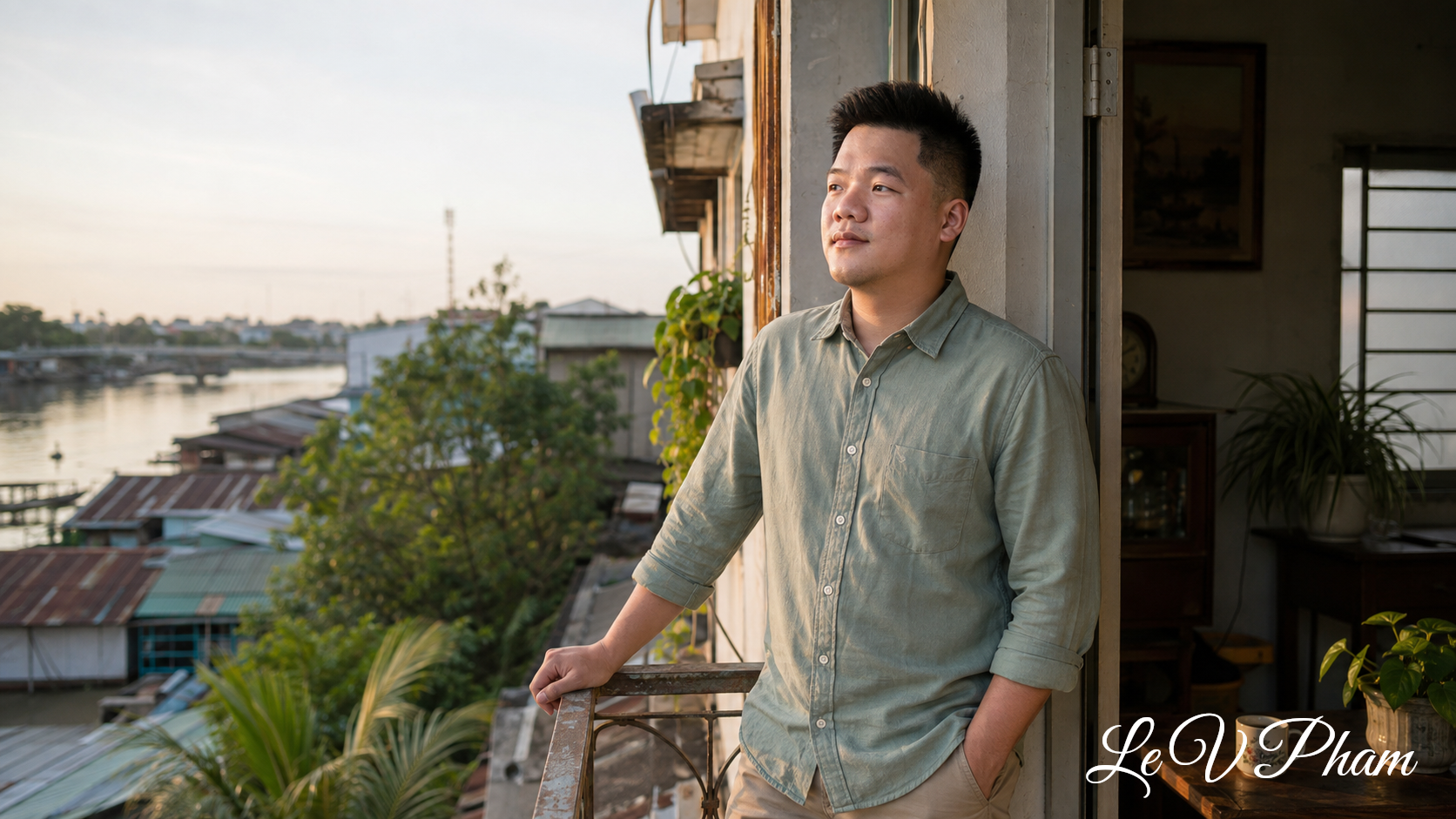
 Le PhamTinkerer · CEO · Hope Dealer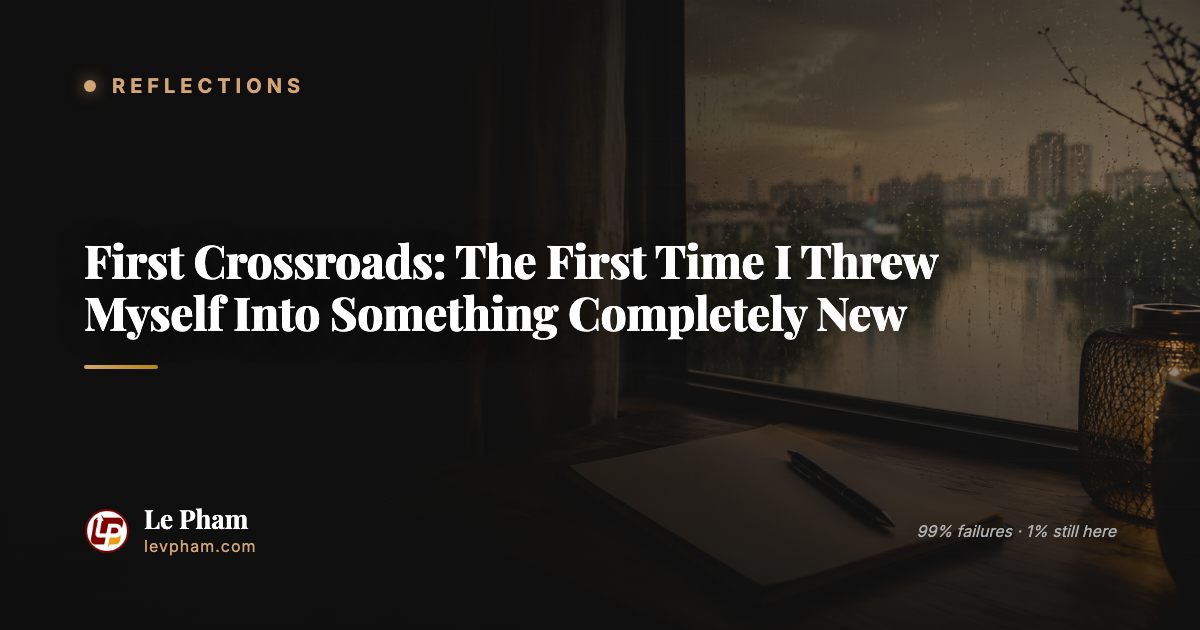
The weather in Can Tho has been undecided lately, sunlight touching the window and then going out, leaving thin streaks of rain behind. I was at my desk, picking up a pen the way you do before a familiar fight, except that time everything was different. In front of me was a subject I knew nothing about, no map, nobody who had gone ahead to show the way. It felt like standing at the sea with strange sand under my feet, flinching at every wave. Some mornings people wake up knowing what to do. That morning I woke up with nothing but questions waiting for answers.
I used to think I was the safe type, no appetite for adventures far from shore. The familiar things, even yellowed with age, felt steadier than a door I had never pushed. Maybe that is why my first turn took so long to arrive. It started by accident, a piece of news, an idea that flashed like lightning at noon. At first the hesitation was obvious: what if I am not suited to it, what if I fall and nobody catches me. But every morning I found myself asking the other question: if I spend my whole life circling the same spot, what will I regret?
That first time was not loud. No lights, nobody cheering. Just a long row of tables, unfamiliar faces, voices with a rhythm I had not learned yet. I hid my confusion behind a layer of borrowed calm and told myself to take one small thing at a time. The strange part is that what I had read in books looked nothing like the real world. Real people, real work, and in an instant all that easy knowledge turned into a maze where I lost my bearings.
The first time I threw myself into something new my mood was lumpy as porridge, a little excitement wedged between anxiety and self-doubt. A strange city, streets I did not know, every trip out the door a test of how much I could take. I remember Canada felt like this too: everything unfamiliar, from ordering food to starting a conversation in the supermarket. The difference is that when I came home the new beginnings were no longer forced on me. I chose them.
The hardest thing about a new environment is not the work. It is the feeling of being small, of being afraid you will look stupid. There were days I stood on the edge, everything I did superfluous, every sentence I said followed by a private question about whether it had landed wrong. One evening I summed up the entire day in a single note: I do not understand anything yet, but I cannot keep not understanding. That is true. Nobody keeps not understanding. You only have to not run away.
I started with small questions, learned to listen more than I spoke. One day I discovered that changing my tone, or a nod at the right moment, was enough to bring someone closer. Learning was not only about holding new theory. It was learning to sit inside the wrongness of the rhythm, learning to be patient with myself. The first success, I realised, was admitting out loud that I was starting from zero. No embarrassment, no pretending I already knew.
The joke is that the more afraid you are of being wrong, the more you trip. As if life were deliberately steering me into a series of small holes to teach me to take the pain in instalments. One day the questions came at me fast and I answered every one of them wrong, and what I carried away afterwards was the feeling of being flustered, not the correct answer. I told myself: if you dared to start, you are allowed to be as wrong as it takes, as long as you stand up the next day and ask again.
One night I got home, threw my jacket over a chair, lay back and listened to my heart going in all directions. That was when I understood that the tiredness was not from the work or the professional challenge. It was from arguing with the voice in my head. What if I really am bad at this. Is it worth continuing. Each time, I tried to sit with the feeling for a while instead of running back to something more familiar.
I reread what I used to tell myself back in the States: if I do not try, I will never know where my limits are. Some lessons, however many times you read them, only sting once you have walked into real life with them. The biggest fear is not failing. It is having to explain to yourself later why you never dared to try.
What you gain and lose at a new turn
Looking back, I cannot remember all the names of the first people I met, and I cannot remember exactly how clumsy I was. But I remember the feeling of standing up to speak in front of a room full of strangers, shaking, embarrassed, and then nobody laughed. I was the only one laughing at myself. Everyone else was busy with their own nerves. Nobody had time to keep watching me.
After a few weeks, the things I had taken for mountains turned out to be low steps. Each one opened another small door. I laughed at how panicked I had been about things that are routine now. I remember standing in that big room without a shred of hesitation, asking the most obviously stupid question in it. In those days each laugh was a prize and each stumble was a ticket into the next stretch of the journey.
One thing I took away that the books rarely mention: getting in early or late matters far less than being willing to shrink and then grow again, bit by bit. When I ran my own business, my first meetings with partners were no different from a raw recruit fumbling through. And yet each time I crossed a threshold of fear I picked up a light scar. Nobody can see them. I can feel that I am not the same.
Now that none of it is brand new, I value the time when I was still trembling through each step. Because later it is very hard to get back the feeling that everything you do is allowed to be wrong, and very hard to find a good excuse for being naive and nosy. The older we get, the more we fear looking foolish. And yet daring to look foolish, daring to step in, is still the only medicine that keeps us from settling into the old frames.
Every time I stepped out of the safe zone, even without winning, I came away with a new piece of ground inside me. A kind of courage that smells of badly made coffee, of rain hammering the pavement, and tastes of the first time you learn that you know nothing.
Sometimes I sit and wonder what I would be if I had not taken that turn. Probably still safe, still doing fine, but I would never know the feeling of laughing like an idiot in a crowd, would never have heard my own heart go wild over an impulsive decision. I learned a lot about the work and about people, but the biggest lesson was probably learning to hold a conversation with my own fear. A turning point is not really about where you end up. It is about being willing to take the new road at all.
Do you remember the first time you did something you had never tried before? What was there at that moment: fear, excitement, or both at once?

Tinkerer in financial economics, serial entrepreneur, and professional stumbler. 99% failures, 1% still here.